

What is Biodiversity Net Gain (BNG)?
Biodiversity Net Gain - known as BNG - is a new planning requirement designed to leave nature in a better state after development, such as housebuilding.
Britain's wildlife has suffered significant declines, driven by centuries of habitat loss, development, and other pressures. Meanwhile, 89% of Britons say protecting nature is important to them.
The purpose of BNG is to ensure new developments leave the natural environment in a measurably better state than before. Since 2024, most developments in England have been required to deliver at least a 10% increase in biodiversity level; a net gain for nature. Habitats created or enhanced to deliver BNG must be maintained for at least 30 years.
The BNG process
- A "suitably competent person", usually an ecologist, assesses the habitats on the site to calculate a baseline of biodiversity value before development begins. This uses the Government's Statutory Biodiversity Metric, which considers habitat type, size, condition and local significance. The metric is then used to calculate the biodiversity value needed to achieve the required net gain.
- The developer must demonstrate how the development will achieve the required Biodiversity Net Gain. For developments subject to mandatory BNG, this is normally a minimum 10% increase in biodiversity. Depending on the development, this can be achieved through on-site mitigation or through off-site Habitat Banks.
- Following planning permission, a Biodiversity Gain Plan must be submitted to and approved by the local planning authority before development begins. The plan sets out how the development will meet its BNG requirement.
- Habitats created or enhanced to provide BNG must be secured and maintained for at least 30 years. Off-site gains must also be registered and allocated to the development before the Biodiversity Gain Plan is submitted.
On-site vs Off-site
BNG can be delivered within the development site or through registered BNG Units elsewhere.
- On-site BNG: a developer can increase biodiversity directly within the development site by avoiding habitat loss, enhancing existing natural features, or creating new wildlife-friendly spaces. Our Wilder Ecology consultancy can provide advice and services to deliver on-site BNG.
- Off-site BNG: a developer can purchase registered Biodiversity Units from a third-party landowner elsewhere if the minimum 10% increase can't be achieved within the site. The closer suitable off-site gains are to the development, the more efficiently they can contribute towards the BNG requirements. At Suffolk Wildlife Trust, we have registered Biodiversity Units for sale in Suffolk.
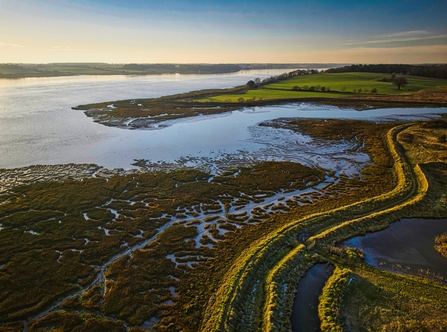
Levington Lagoon and the River Orwell - Ronnie Roberts
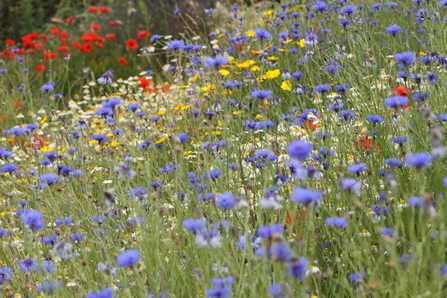
Wildflowers - Steve Aylward
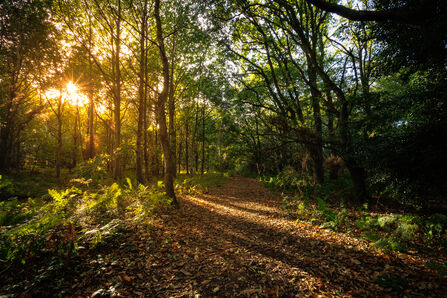
Lound Lakes - Nick Jermy
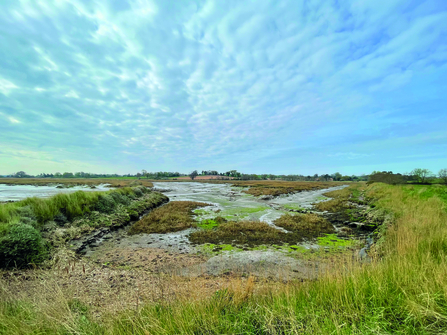
Martlesham Wilds - Steve Aylward
What does Suffolk Wildlife Trust think of BNG?
We believe that, done well, BNG could and should help development and nature to exist in harmony, for the benefit of communities, businesses and wildlife who rely on a well-functioning natural ecosystem.
We want to ensure that BNG is done well; that all development delivers genuine improvement for biodiversity that protects wildlife, improves climate resilience, and restores community green space. That's why we are advocating for developers and planning authorities to commit to a 20% net gain, higher than the statutory required 10% increase.
To help developers deliver BNG in Suffolk, we have registered BNG Units at three of our nature reserves, and our ecology experts can provide BNG surveying and monitoring services.
FAQs and Useful Links
How will Biodiversity Net Gain be measured?
Natural England and the Department for the Environment, Food & Rural Affairs (Defra) have developed a tool, known as the Defra Metric, which uses information on the type, size, condition, and location of habitats to calculate their biodiversity value. This is measured in ‘Biodiversity Units’. The Metric is used to calculate the change in the biodiversity value, measured as an increase or decrease in Biodiversity Units, between pre- and post-development habitats. This will then tell developers if they need to do more to increase biodiversity as part of a proposed development.
How can developers achieve a gain in Biodiversity Units?
By creating new habitats or improving the condition of habitats that already exist on the development site (on-site) or away from the development site (off-site), developers will be able to increase the number of Biodiversity Units compared with pre-development levels. The starting point though should always be to avoid loss in the first place by retaining existing habitats.
Developers are encouraged to deliver BNG on-site if possible. If off-site Biodiversity Units are required, developers will have the option to buy the Units they need from a registered provider, or ‘habitat bank’, where habitats have been created or enhanced in advance. Alternatively, off-site BNG habitats might be created ‘to order’ based on the specific needs of a development.
Off-site BNG should be delivered in strategic locations to provide the greatest value for biodiversity, and sites will have to be registered with Natural England and submit regular reports on the condition of habitats.
Species enhancements, such as bat boxes or bird boxes, are still required in new developments but are not included in BNG calculations.
Do you need a Biodiversity Net Gain Assessment? Our Wilder Ecology team can help.
Do you need to buy off-site Biodiversity Units? Find out more about purchasing Biodiversity Units from Suffolk Wildlife Trust:
Who will check that biodiversity gains are being delivered?
Local planning authorities will be responsible for monitoring and enforcement, but the cost of this should be paid by the developer, who is ultimately accountable for BNG delivery.
BNG habitats must be maintained for a minimum of 30 years, but should ideally be retained in perpetuity.
You can find out more about BNG, and the role of local authorities, on the Local Government Association’s Planning Advisory Service website.
How does Biodiversity Net Gain affect other wildlife protections and planning requirements?
BNG is additional to, and does not remove or replace, other legal and planning policy protections and requirements such as those set out in the Wildlife and Countryside Act 1981 and national and local planning policy.
Development requiring planning permission will still have to assess the potential for impacts to designated wildlife sites, such as Sites of Special Scientific Interest (SSSI), and protected species like bats and hazel dormice. Any such impacts will still need to be addressed according to the mitigation hierarchy – 1) avoid, 2) mitigate, 3) compensate – separately from BNG, and may require a Natural England licence.
Will Biodiversity Net Gain mean Irreplaceable Habitats are lost?
No. Irreplaceable habitats are habitats that take a very long time to develop or are very technically difficult to recreate and have significant protection in national planning policy. Development that would result in loss or damage to irreplaceable habitats will not normally be permitted. BNG will not change this.
How does BNG help nature recovery?
BNG could help to reverse biodiversity declines and increase nature in Suffolk by creating and restoring priority wildlife habitats where they will become part of a Nature Recovery Network, working at a local, county, and national scale.
To achieve this, it is essential that we have ambitious local BNG policies and frameworks that ensure development delivers significant and meaningful increases in biodiversity and the right habitats are created in the right places and retained and managed in perpetuity.
We are encouraging local authorities in Suffolk to help ensure BNG supports nature recovery by:
- requiring new development to deliver at least a 20% increase in biodiversity,
- delivering a proportion of BNG for every development through off-site measures that support wildlife recovery in the wider landscape,
- preventing a ‘race to the bottom’ that could result from developers selling ‘excess’ biodiversity increases to offset biodiversity losses elsewhere.
You can read our policy advocacy briefing and recommendations for Suffolk local authorities, and the evidence we have gathered to support ambitious local policies:
Why does Suffolk Wildlife Trust advocate for a minimum 20% BNG?
Suffolk’s wildlife is rich and varied, with most of our coastline and many of our remnant wetlands, meadows and ancient woodlands protected as nationally or internationally important for wildlife. These places face significant development pressures, both from new housing to meet the needs of a growing population and from the new energy infrastructure needed to reach UK Government net zero targets and bring offshore wind power into the national grid.
The UK Government has set the minimum level of BNG development in England must achieve at 10% – this is within the typical range of statistical uncertainty of most ecological studies and is the lowest level of gain needed to be reasonably confident that development will not result in a loss of biodiversity. But no loss is not the same as increasing biodiversity and a 10% minimum is simply too low to ensure genuine biodiversity gains.
To help protect and restore nature across our county, we believe all development should be achieving at least 20% BNG. Suffolk County Council has already adopted it own policy aim to achieve a 20% BNG within its own housing programme, and we want other local authorities and all new development in Suffolk to follow suit.
Read more about our recommendations and the evidence we have gathered to support more ambitious BNG policies in Suffolk: