What is bycatch, and how does it impact Suffolk's marine wildlife?

What is bycatch, and how does it impact Suffolk's marine wildlife?

Harbour Porpoise ©Niki Clear

A new report reveals the devastating impact of bycatch on British marine wildlife. In this blog, we explore what bycatch is, the impact it's having on Suffolk's seas, and the local species most at risk.

When we think about fishing, we often imagine fish and shellfish being caught and brought to shore. But not everything caught at sea is intended. Across the UK, thousands of marine animals are accidentally captured every year in fishing gear - a problem known as bycatch. 

Bycatch happens when fishing gear unintentionally catches non-target species. This can include marine mammals like whales, dolphins and porpoises, as well as seabirds, sharks and other fish species. 

Accidental entanglement in fishing gear is one of the biggest threats to Britain’s whales, dolphins and porpoises, causing hundreds of avoidable deaths every year. These magnificent animals can become entangled in nets, leaving them unable to surface for air, leading to life-altering injuries or death by drowning. 

Harbour porpoise caught in a fishing net

Harbour porpoise caught in a fishing net - Nick Davison

A national problem 


A new report published by Wildlife & Countryside Link highlights that while much of the UK’s seas are designated as protected, these protections are often too weak or poorly enforced to address major threats to marine wildlife and habitats, such as bycatch. The report calls for urgent action, including phasing out harmful fishing practices, improving monitoring, and better management of Marine Protected Areas (MPAs). 

“…the current UK legal framework for marine mammal protection is incoherent, inadequate, too slow.” 

Although bycatch is a nationwide issue, its scale and impact vary by region. In places like the south-west of England, higher levels of fishing activity and certain gear types can result in more frequent incidents. Suffolk, by comparison, is considered a lower-risk area - but that doesn’t mean the problem isn’t here.


Bycatch in Suffolk 


Across Suffolk’s seascapes, the most affected marine mammal is the harbour porpoise. This shy species is one of the smallest cetaceans – less than half the size of a bottlenose dolphin – and is commonly seen in the North Sea, with occasional sightings in Ipswich docks. 

While individual risks here may be lower compared to other parts of the country, Suffolk waters are still important habitat that needs better protections to prevent the problem from escalating. Large numbers of harbour porpoises gather along the Suffolk coast in winter, likely because of the warmer water temperatures, meaning that even relatively low levels of bycatch can have a significant impact on the national population. 

Harbour porpoise

Harbour porpoise - Erik Christensen

Across the UK, between 800 and 1,200 harbour porpoises are estimated to be killed each year in fishing nets. In the wider North Sea, regulators have warned that total bycatch may already exceed sustainable levels. 


Why are porpoises at risk? 


The main issue is gillnets. These static fishing nets are left in the water and can cover vast areas of the seascape. Gillnets can be difficult for porpoises to detect, especially in murky conditions, leading to accidental entanglement. 

There are measures designed to reduce this risk. For example, some larger vessels must use Acoustic Deterrent Devices (ADDs), or “pingers”, which emit sound to keep porpoises away from nets. These have been shown to significantly reduce bycatch, however there are still gaps.  

Many smaller inshore boats (under 12 metres), which make up much of Suffolk’s fleet, are not required to use these acoustic devices, and regulations can sometimes be worked around, reducing their effectiveness. 

But there’s good news: much of Suffolk’s local fishing community operates inshore and use lower-impact methods, such as long-lining for fish and potting for crabs and lobsters. These methods tend to result in far less bycatch compared to large-scale trawling or extensive gillnetting. In contrast, bigger industrial vessels operating offshore - sometimes overlapping with protected areas – have the biggest impact on porpoises and other marine wildlife.


What about seabirds? 


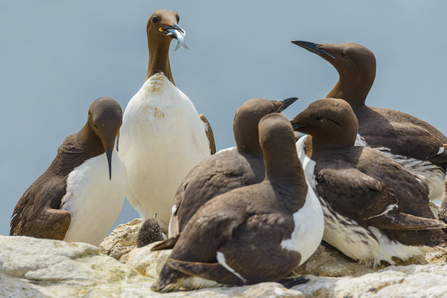
Bycatch doesn’t just affect marine mammals. Seabirds can also become caught in fishing gear, particularly in offshore fisheries. 

While the highest risk areas for seabird bycatch are in northern UK waters, the Southern North Sea still sees thousands of bird deaths each year across the wider fishing fleet. This has prompted trials of new mitigation methods, including monitoring and changes to fishing practices. 

Protected seas - are they working? 


Several areas of Suffolk’s seas and estuaries have legal designations that protect marine wildlife and habitats. The largest of these are the Orford Inshore MCZ (Marine Conservation Zone) and Southern North Sea SAC (Special Area of Conservation), which both have designations targeted to protect species that are most at risk. For example, the Southern North Sea SAC has specific designations for the conservation and protection of harbour porpoise.   

But as highlighted in the recent report, these marine designations are not enforced in the same way that land designations are, because harmful activities are mostly out of sight. Without effective management and enforcement of MPAs, damaging practices can still take place within them.  

Improving how these areas are managed - particularly reducing harmful fishing practices – is a critical step towards protecting marine life. 


What needs to change? 


We’re joining The Wildlife Trusts in calling for the UK Government to: 

  • Improve enforcement and management of existing Marine Protected Areas (MPAs) 
     
  • Protect key feeding areas that support whales, dolphins and porpoises. 
     
  • Reduce accidental bycatch in fishing gear by phasing out the most harmful nets and testing safer alternatives. 
     
  • Create a UK plan to reduce underwater noise from both shipping and marine development with clear limits to protect sea wildlife. 
     
  • Improve monitoring of whales, dolphins and porpoises using more surveys, better technology, and citizen science.  
     

These measures could help build a clearer picture of the problem and support practical solutions to protect and restore Britain’s marine wildlife and habitats. 

Even in areas like Suffolk, where bycatch levels are relatively low, the cumulative effect across the wider region can be significant. The sea does not recognise county boundaries — and neither do the challenges facing wildlife.


Further reading


Hidden in the Haul: The true scale of bycatch - WCL

Priority Actions for North Sea Cetaceans 2026 - The Wildlife Trusts

UK laws failing to protect whales and dolphines - The Wildlife Trusts