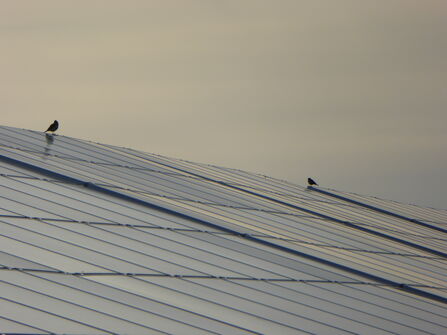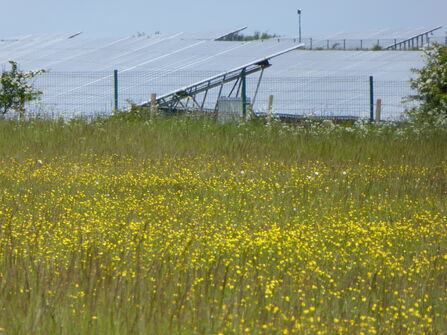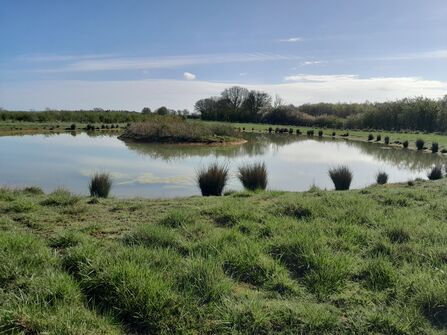
New research from Suffolk Wildlife Trust, Cubico, and Broxted Estate provides fresh evidence of the role that well-designed and responsibly managed solar farms can play as powerful catalysts for nature recovery, while generating clean electricity for communities.
The findings, published in a new report, draw on more than a decade of ecological monitoring and active management at Broxted Estate and Solar Farm. Broxted is owned by the Ryder family (through their partnership, Navigator Land LLP) and the solar farm is operated by renewable energy company Cubico[1].
Planning for the solar farm began in 2011 and the site began generating electricity in December 2013. At the time, it was the second largest solar farm in the UK. From the outset, the solar farm has been developed and managed as part of the wider estate, with great emphasis on the landscape including habitat restoration in surrounding land parcels delivering significant ecological and biodiversity uplifts.
Ongoing ecological monitoring of the site by Suffolk Wildlife Trust – in collaboration with Charles Ryder and Cubico – has helped build an important case study for how future renewable energy development could contribute to the energy, biodiversity, and climate crises in tandem.
Key findings of the report
- 41% increase in biodiversity across Broxted Estate & Solar Farm, demonstrating the potential for solar developments to support nature recovery alongside clean-energy generation.
- Increased biodiversity and ecological benefits are made possible through active management and a collaborative, holistic approach to integrate conservation and community objectives.
- Solar farm design integrating energy production, agriculture and biodiversity enhancements demonstrate Broxted as a pioneering example of agrivoltaic technology.
- Sheep grazing on the solar farm is key to managing the wildlife habitats whilst maintaining food production.
- 6 Red List and 13 Amber List BoCC5 bird species were recorded in the restored habitats surrounding the solar farm, including the internationally threatened turtle dove.
- Meadow pipit numbers on and around the solar farm have more than doubled, making the site significant at county level and bucking the species’ wider national decline
- Skylarks continue to nest in grasslands immediately adjacent to the solar farm but are no longer present on the solar farm. Such immediately available grassland was deliberately planned.
- 8 bat species were recorded across the habitats surrounding the solar farm, although lower levels of activity were observed within the solar farm itself.
- The solar farm has generated over 350GWh of clean electricity since 2013 - equivalent to the annual consumption of 100,000 UK homes .