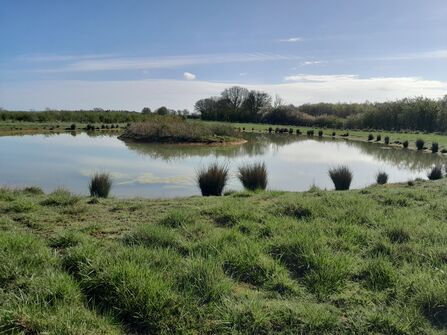
New report of Suffolk solar farm showcases ecological best practice

New report of Suffolk solar farm showcases ecological best practice

Broxted Solar Farm - Wilder Ecology

Pioneering 12-year study carried out by Suffolk Wildlife Trust at Broxted Estate & Solar Farm Suffolk demonstrates how renewable energy generation and biodiversity restoration can be achieved together, through long-term management, ecological monitoring and collaboration across the wider landscape.

New research from Suffolk Wildlife Trust, Cubico, and Broxted Estate provides fresh evidence of the role that well-designed and responsibly managed solar farms can play as powerful catalysts for nature recovery, while generating clean electricity for communities.

The findings, published in a new report, draw on more than a decade of ecological monitoring and active management at Broxted Estate and Solar Farm. Broxted is owned by the Ryder family (through their partnership, Navigator Land LLP) and the solar farm is operated by renewable energy company Cubico[1].

Planning for the solar farm began in 2011 and the site began generating electricity in December 2013. At the time, it was the second largest solar farm in the UK. From the outset, the solar farm has been developed and managed as part of the wider estate, with great emphasis on the landscape including habitat restoration in surrounding land parcels delivering significant ecological and biodiversity uplifts.

Planning for the solar farm began in 2011 and the site began generating electricity in December 2013. At the time, it was the second largest solar farm in the UK. From the outset, the solar farm has been developed and managed as part of the wider estate, with great emphasis on the landscape including habitat restoration in surrounding land parcels delivering significant ecological and biodiversity uplifts.

Ongoing ecological monitoring of the site by Suffolk Wildlife Trust – in collaboration with  Charles Ryder and Cubico – has helped build an important case study for how future renewable energy development could contribute to the energy, biodiversity, and climate crises in tandem.
 

Key findings of the report
 

  • 41% increase in biodiversity across Broxted Estate & Solar Farm, demonstrating the potential for solar developments to support nature recovery alongside clean-energy generation.
     
  • Increased biodiversity and ecological benefits are made possible through active management and a collaborative, holistic approach to integrate conservation and community objectives.
     
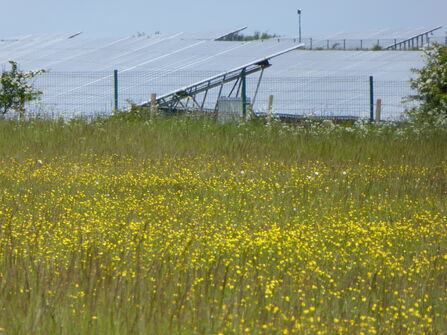
  • Solar farm design integrating energy production, agriculture and biodiversity enhancements demonstrate Broxted as a pioneering example of agrivoltaic technology.
     
  • Sheep grazing on the solar farm is key to managing the wildlife habitats whilst maintaining food production.
     
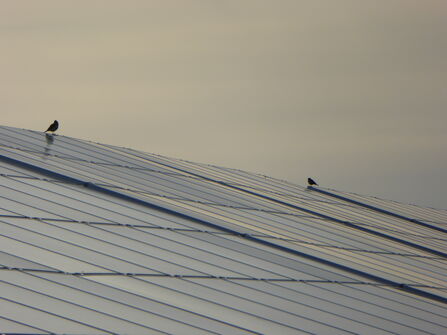
  • 6 Red List and 13 Amber List BoCC5 bird species were recorded in the restored habitats surrounding the solar farm, including the internationally threatened turtle dove.
     
  • Meadow pipit numbers on and around the solar farm have more than doubled, making the site significant at county level and bucking the species’ wider national decline
     
  • Skylarks continue to nest in grasslands immediately adjacent to the solar farm but are no longer present on the solar farm. Such immediately available grassland was deliberately planned.
     
  • 8 bat species were recorded across the habitats surrounding the solar farm, although lower levels of activity were observed within the solar farm itself.
     
  • The solar farm has generated over 350GWh of clean electricity since 2013 - equivalent to the annual consumption of 100,000 UK homes .
A holistic approach to solar


Broxted Solar Farm was designed as part of a wider strategy for the whole estate which integrated energy generation, wildlife conservation, landscape management, woodland restoration, farming, and community engagement. 

The project is delivered through a long-term partnership between the Navigator, Cubico, the Suffolk Wildlife Trust, and the local community, especially in the village of Hundon within which Broxted largely lies. The report concludes that this collaborative, holistic, landscape-scale approach has been central to the positive outcomes for wildlife and the local community.

Charles Ryder, owner of the Broxted Estate, says:

“I passionately believe that solar is the energy source of the 21st Century but is best delivered in a way which combines the clear and pressing need for energy with the needs of wildlife and communities too. At Broxted, we have therefore taken a holistic approach, creating an Integrated Strategy. This encompasses not only the solar farm but also the surrounding land and we have now been systematically implementing it for some 14 years.

"Successful implementation depends on strong partnerships built on shared long-term interests; we are planning for the 21st Century. Cubico are exceptional partners, sharing our long-term vision for renewable energy coupled with an unwavering commitment to conservation, biodiversity and the Community. Our partnership with Suffolk Wildlife Trust is equally invaluable, providing outstanding advice and expertise. The local Community too is a constant source of encouragement and inspiration.

"Land use and the rural landscape are constantly evolving to meet Society’s needs and aspirations – Broxted is very much a case in point. The land has always been a source of energy as well as food and solar is the latest variant. But it is so important that this evolution works in harmony with the landscape, the Community and the wider ecology. I hope this report offers some useful guidance towards how this can be best achieved.”
 

Outcomes for wildlife


A retrospective Biodiversity Net Gain (BNG) assessment found an overall biodiversity increase of 41% across Broxted Estate since 2011.

The findings further highlight the importance of considering solar farms as part of a wider landscape in which they operate. At Broxted, habitat creation and management have delivered significant benefits for wildlife both on the solar farm itself and across surrounding land.

More than a decade of monitoring has recorded a rich diversity of species, including 6 Red List and 13 Amber list Birds of Conservation Concern (in 2025). Meadow pipit numbers have increased significantly, making the solar farm and wider estate a regionally significant site for the songbird, bucking national trends.

Meanwhile, habitat management across the estate has benefited species including turtle dove, yellowhammer, and linnet. Carefully managed grassland, woodland, scrub and ponds also support bats, common lizard, common toads, water shrews, and pollinator-friendly wildflowers.

The research also identified areas in which solar development may affect particular species. Skylarks, which favour large, uninterrupted areas of open ground, were recorded on the site before the construction of the solar farm but have not been observed within its boundaries since 2024. They  continue to nest in immediately neighbouring grassland, underlining the importance of retaining or creating suitable open grassland habitats elsewhere in the surrounding landscape.

Jo Green, Wilder Ecology Manager at Suffolk Wildlife Trust, says:

"Early engagement with ecologists during the planning and design stages has been instrumental in delivering successful biodiversity outcomes at Broxted Solar Farm and the wider Estate. More than 12 years of habitat and key species monitoring has generated a valuable long-term ecological dataset in an area where such evidence is scarce. This robust evidence base, combined with collaborative working through the Environmental Management Group, has been fundamental to the site's ecological success.

“We hope the lessons learned here encourage landowners, developers and ecologists to work together from the earliest stages of solar farm design, helping to maximise benefits for nature alongside renewable energy generation.”
 

Clean, British energy


The UK needs to substantially expand its supply of homegrown renewable electricity while responding to climate change and reversing the decline of nature. Broxted provides a long-term example of how these priorities can be addressed together. As global conflict, rapidly changing climate, and ever-increasing consumer demand put further pressure on energy security, renewable energy solutions such as solar are vital for a sustainable future.

Since 2013, Broxted Solar Farm has generated more than 350 GWh of clean electricity, avoiding thousands of tonnes of carbon emissions.

At the same time, the wider approach to the estate has created and enhanced wildlife habitats, supported farming and engaged local communities through public access, educational initiatives and the Broxted Solar Community Fund. 

The report demonstrates that clean energy production and nature recovery need not be competing land uses. When solar farms are well-designed, responsibly managed and integrated into a wider landscape strategy, they can generate clean energy while making a meaningful contribution to rural land management, wildlife, and local communities.

Jack Chambers, Head of Asset Management UK at Cubico, concludes:

“What stands out to me about Broxted is that it shows what can be achieved when renewable energy and environmental stewardship are considered together from the beginning. For over a decade, the site has generated clean, homegrown electricity while creating space for wildlife, farming and the local community.

“There are also important lessons for our industry. These positive biodiversity outcomes don’t happen by chance, they need solar developers, landowners and ecologists to work together throughout a project’s life. By taking what we’ve learned here, we can develop solar projects that support both the UK’s energy needs and protect our wildlife.”

[1] The Broxted Solar Project is jointly owned by GLIL Infrastructure and Cubico Sustainable Investments, with Cubico holding a majority stake and serving as the project manager.