

Yellowhammer © Chris Gomersall / 2020VISION
Yellowhammer
How we're protecting Suffolk's yellowhammer populations, and restoring the habitats they need to survive.
The sunshine-yellow flash of a busy yellowhammer, and their charming “little bit of bread and no cheese” song, were once a common sight and sound of the British summer. A member of the bunting family, yellowhammer eat seeds and insects and are active all-year-round, but may flock in spectucular numbers over the colder months.
Sadly, like many of Britain's farmland birds, yellowhammer populations have faced massive declines in recent centuries - by an estimated 61% between 1967 and 2020 [RSPB]. They are a red-listed bird of conservation concern in the UK.
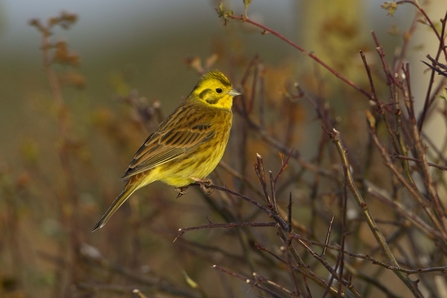
Yellowhammer ©Mark Hamblin/2020VISION
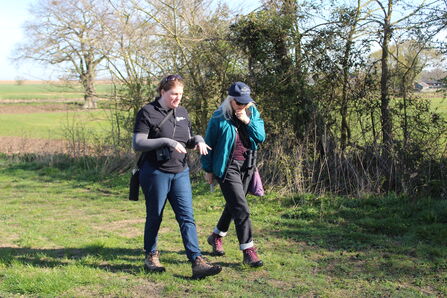
Jenny Rawson and Helen Bynam, Farm Advice Team - Amy Falla
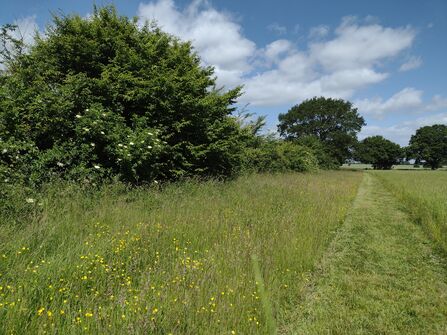
Farmland hedge, Maddie Lord
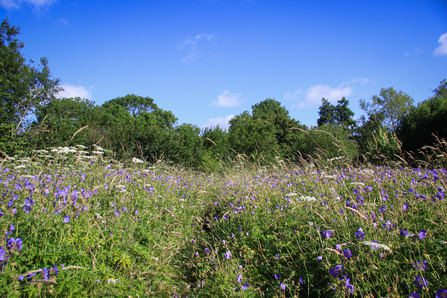
Jesse Walker
Their decline has mostly been driven by the removal and over-management of hedgerows, which has destroyed their nesting habitats of dense, ground-level vegetation and tussocky grasses. The efficiency of modern farming machines and the loss of winter stubbles (the practice of leaving crop stalks after harvest) has removed much of their winter food, impacting the birds' health and condition before the crucial breeding season.
But there's hope. We're working on our nature reserves to restore the thick hedgerows and seed-rich grasslands yellowhammer need. We're also working beyond our nature reserves with local farmers to help make Suffolk's farmland landscapes more yellowhammer-friendly.
How Suffolk Wildlife Trust is helping yellowhammer
Working with farmers and landowners
Our nature reserves alone cannot provide all the habitat yellowhammer need to survive. That’s why our Farm Wildlife Advice team support farmers and landowners across Suffolk to implement wildlife-friendly farming practices and land management techniques that restore thicker, species-rich hedgerows.
By altering crops and sensitively managing grassland areas, farmers can continue to produce food and resources whilst also providing yellowhammer with the nesting habitat and food sources they need to survive.
In the north and south of Suffolk, our Wilder Landscapes team are developing two Landscape Recovery projects - Waveney and Little Ouse Landscape Recovery in the north and Connecting Constable & Gainsborough Country in the south - which both aim to establish landscape-scale partnerships of farmers across vast areas of the county, to unlock sustainable farming and nature recovery together.
The more land supporting wildlife, the greater chance we have at restoring a wilder Suffolk.
Managing habitats on our nature reserves
Across many of our grassland, heathland, and ex-arable nature reserves, we carefully manage habitats to create optimal conditions for yellowhammer and other bird species.
Conservation grazing with sheep, cattle, or ponies helps to keep grassland short and uneven, naturally increasing plant diversity the supports the invertebrates that yellowhammer feed on. On some reserves, we carry out annual grass and reed cutting to maintain tussocky features and manage the development of scrub. This is balanced by leaving areas for plants to go to seed, providing more food sources.
At Black Bourn Valley and Foxburrow nature reserves, we have excellent mature hedgerows, full of berries, seeds, and insects for farmland birds to eat - as well as providing crucial nesting habitat. Meanwhile at Martlesham Wilds, one of our newest reserves, we have quickly seen yellowhammer numbers bounce-back as we begin to allow nature to reclaim the site .
By delivering habitat management and creation targeted at yellowhammer, we are stabilising Suffolk’s yellowhammer population and setting them on the path to becoming abundant again.
Campaigning for better support for farmers
Agriculture is one of the biggest contributors to habitat loss and fragmentation, as well as pollution from pesticides. Many farmers want to support the countryside and the wildlife they share their land with, but Government demands - driven by consumer demand - often force them to choose between higher production and caring for nature.
Our Planning & Advocacy and Campaigning & Activism teams engage with Suffolk MPs to make nature-friendly farming a higher priority for the national Government, so that farmers can support yellowhammer and other farmland wildlife without risking their livelihoods.
We also work with The Wildlife Trusts federation on national campaigns to uphold environmental regulations and halt nature's decline.