

Dormouse - Brett Lewis
Hazel dormouse
Protecting and restoring Suffolk's hazel dormouse population.
The hazel dormouse is one the UK's fastest declining species; it's estimated that 70% of the population has been lost since 2000. In Suffolk, we have nationally important strongholds of the small mammal, including at our Bradfield Woods and Arger Fen & Spouse's Vale nature reserves.
The biggest contributors to dormice's decline are habitat loss and fragmentation. They rely on deciduous woodlands, ancient coppice, and species-rich hedgerows for nesting and for food throughout the year. As agriculture, housing, and infrastructure have developed, these precious habitats have become isolated or destroyed, leaving hazel dormice with disconnected pockets of habitat in the landscape.
That's where we come in. On our woodland nature reserves, in our work with farmers, and in our engagement with developers and planning authorities, we're protecting the dormice habitats that remain, and restoring what has been lost.
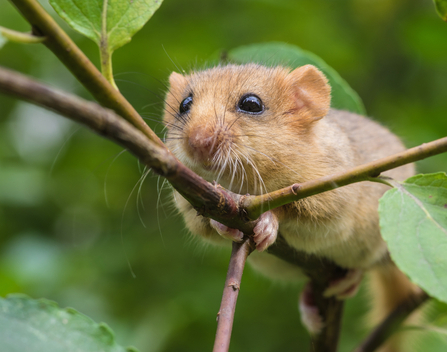
Dormouse adobe stock
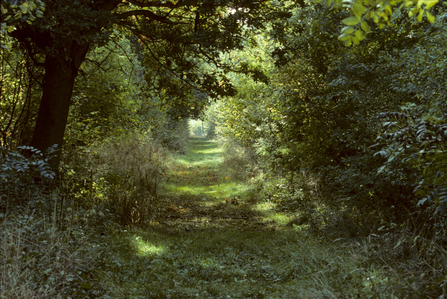
Bradfield Woods - Andrew Bennett
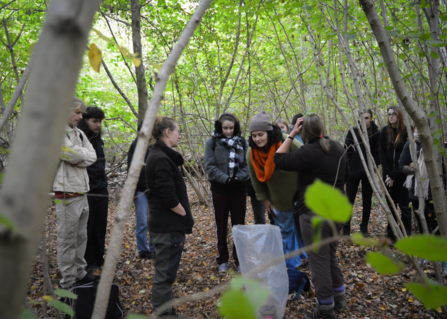
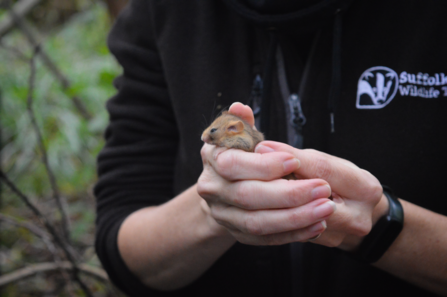
How Suffolk Wildlife Trust is helping hazel dormice
Surveying and monitoring
Understanding how dormice are faring is critical to keeping their populations stable and to targeting conservation efforts effectively.
We carry out monitoring through the Essex & Suffolk Dormouse Group, working with teams at Essex Wildlife Trust and conservationists across the two counties.
In Suffolk, we currently monitor dormice across 13 sites, where our specially trained, licensed ecologists check nest boxes at least twice a year, with the support of amazing volunteers from as far afield as Yorkshire.
All the data we gather is shared with The People’s Trust for Endangered Species’ National Dormouse Monitoring Programme, helping to identify national population trends. In addition to monitoring, we also carry out surveys to try to locate new dormouse populations. At Bradfield Woods, we are also conducting research to better understand hazel dormouse ecology.
Managing habitats on our nature reserves
Our Bradfield Woods and Arger Fen & Spouse's Vale nature reserves are nationally important for hazel dormouse, thanks to their rich mix of woodland habitat.
Within our management plans for these two reserves, we have dedicated activity designs to protect dormice habitat and to create even more habitat. The ancient coppice woodland of Bradfield Woods has a dense, well-developed understory which provide hazel dormouse with nesting sites and food sources. Similarly at Arger Fen & Spouse's Vale, the mosaic of ancient, wet, and regenerative woodland - intersperesed with mature scrub - have sustained dormice populations for centuries.
By delivering habitat management and creation that’s targeted for hazel dormouse in these woodland reserves, we’re maintaining Suffolk’s dormouse population.
Working with farmers and landowners
Our nature reserves alone cannot provide all the space hazel dormice need to become abundant again. That’s why we work with farmers and landowners close to known dormouse populations to restore, expand and reconnect their habitat.
Our Farm Wildlife Advice team works with farmers across Suffolk to encourage, support and develop wildlife-friendly management, helping to make more space for nature. For hazel dormice, creating richer hedgerows and woodland areas on farms not only provides vital habitat, but also helps to re-establish corridors between habitats, allowing dormice to move safely through the landscape.
In south Suffolk, our Wilder Landscapes team is developing a Landscape Recovery project that aims to restore woodland and reconnect habitats across Constable and Gainsborough Country, with specific goals to reconnect isolated hazel dormouse populations.
Campaigning for nature-positive planning
Agriculture, housing, and infrastructure are the biggest contributors to habitat loss and fragmentation. Despite hazel dormouse being a protected under the Wildlife and Countryside Act 1981, these protections are constantly under threat by Governments and developers.
Our Planning & Advocacy team engage with developers and local councils to ensure protected species and habitats - including hazel dormouse - are not impacted by new development in Suffolk.
We also work with the Wildlife Trusts federation on national campaigns to uphold environmental regulations and halt nature's decline.