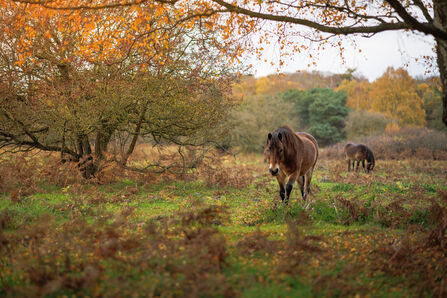
New project to restore Suffolk's ancient heathland

New project to restore Suffolk's ancient heathland

Knettishall Heath - Paul Ham

After the success of heathland restoration works at Knettishall Heath Nature Reserve in the 2010s, Suffolk Wildlife Trust is preparing a follow-up series of works to restore even more of the ancient, wild heathland.

Knettishall Heath is a special place - one of the largest remnants of Suffolk’s ancient heathland, home to unique plant and animal species, many of which are in decline or under threat. A number of these species have recovered across the landscape since Suffolk Wildlife Trust became custodians of the site, and we are now preparing new works to restore even more of the heathland habitat for wildlife. 

The Brecks is a distinctive environment spanning the border of northwest Suffolk and southwest Norfolk, characterised by pine forests, sandy soils, dry heathland, and rare wildlife. Much of what was once an open landscape of semi-natural habitat has become highly fragmented and dominated by woodland that has either been planted or regenerated over the past 60 years. 

Some of this newly established woodland can be beneficial for nature. However, in many areas these young woodlands have encroached onto precious heathland, compromising the ancient ecology of the landscape and putting the unique, specialist heathland plants and animals at risk.  
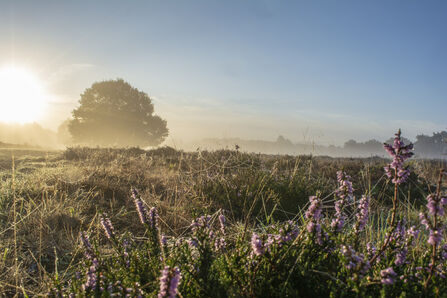
As part of our wider heathland restoration vision, we are proposing a series of targeted conservation felling works to remove young, mixed broad leaf woodland - particularly on the edges of more mature woodland or around historic ponds.  

These works will help restore the characteristic heathland vegetation and soil conditions for wildlife conservation. Follow-up conservation grazing with British native ponies will also help to maintain the delicate ecological balance, supporting a more climate-resilient, wildlife-rich landscape.


Next steps

Once we have permission, we will have a five-year window to undertake the conservation felling works within the target areas of the nature reserve. The works will take place over the winter seasons - from the beginning of October to the end of February - to avoid disturbing breeding wildlife.  

Most of the works will be undertaken by Suffolk Wildlife Trust staff and volunteers, allowing for gradual tree removal and a sensitive approach for wildlife and visitors. Contractors may be used for timber extraction and potential thinning of the conifer plantation in the southwest of the reserve.  


Benefits to wildlife

The works will create a more diverse, connected and resilient natural landscape in which wildlife can recover and thrive. A lot of these benefits have been started through the previous felling and heathland restoration, and our aim to build on this success by widening and diversifying the connecting areas.  

Since completeing the previous works, we have seen biodiversity returning to the land. Ground-nesting birds - such as woodlark and nightjar - that rely on open spaces are returning to breed across the restored compartments. 

Woodlark

©Stefan Johansson

Woodlark had been lost at Knettishall Heath when we took on the site in 2012, but after years of restoration work we now have 7 breeding territories - a fantastic testimony to the restored Breckland heath, and an exciting indicator that the ecosystem is recovering.  

Invertebrates such as heather bee and bee wolf are using the newly created bare ground areas to form colonies, breed and hunt. Heathland flora such as sheep sorrel and heath bedstraw are being observed in previously wooded areas that were once historical Breckland heath.  

FAQs

Why do you need a felling license?

A felling license is legally required in the UK for those looking to fell trees in areas of particular sizes or with environmental protections. Felling licenses are really important for preventing needless or excessive tree cutting that negatively impacts wildlife or the environment. 

Which tree species will be cut?

Most of these trees that will be felled will be birch, pine or oak. 

What will happen to the timber?

Deadwood and some fresh cut timber will be left on the reserve to provide habitat for various species of insect, reptile, and small mammal. The remaining timber will be sold as firewood or processed to be sold as woodchip.

Will there be damage to the ground or flora?

As with all winter habitat management works, there may be some surface damage to tracks where machinery is used to process felled trees. Any significant damage will be restored once the works are complete. Ground disturbance can be beneficial to some flora, opening the seed bank whilst creating bare ground opportunities for Breckland invertebrates and plant species that struggle with competition.