

Lapwing by Mark Hamblin
Lapwing
With its tumbling flight, rounded wings, and iconic ‘peewit’ call, the lapwing is a widespread and formerly common wading bird in Suffolk.
These days, sadly, lapwing are no longer so common. Their populations have more than halved in recent decades due to the loss of their natural marshland habitat, which they need to raise their chicks and find food. The main reasons many of Suffolk's marshlands have been lost or damaged is landscape-scale drainage for agriculture, and the increased intensity of livestock grazing.
Lapwing nest in open areas, away from trees, and often on slightly raised, bare ground which gives them a good view of approaching predators. As they nest in the open, they rely on camouflage amongst grass and other vegetation to disguise their eggs and young. After hatching, the chicks seek areas to hide and will also often be seen feeding by the water’s edge.
At Suffolk Wildlife Trust, we work on our nature reserves and with local farmers, landowners, and other environmental groups to restore natural habitat for lapwing; creating more spaces for them to live, breed, and for their populations to recover.
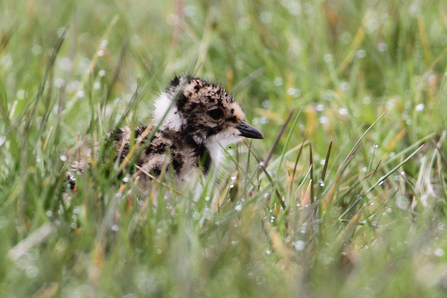
Lapwing chick - Margaret Holland
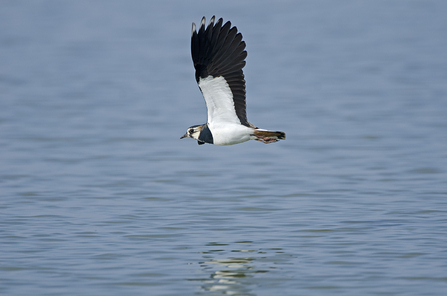
Lapwing by David Tipling
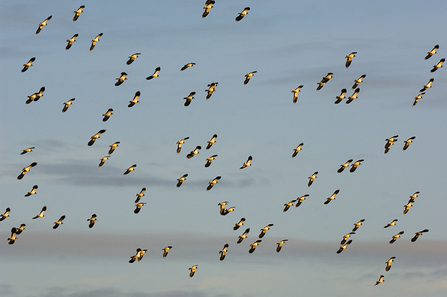
Lapwing - Andrew Parkinson
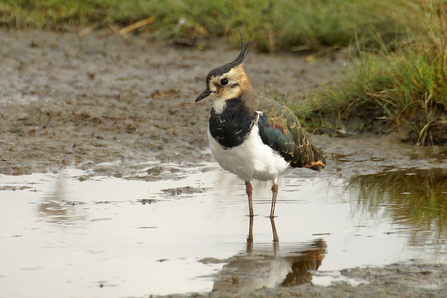
Lapwing - David Longshaw
How Suffolk Wildlife Trust is helping lapwing
Managing and creating habitat on our nature reserves
At many of our wetland nature reserves across Suffolk, we have strong populations of lapwing with successful breeding pairs.
Many of our reserve management plans include targteed, seasonal works that are specifically designed to maintain and restore the habitats lapwgin need to survive. Reserves such as Trimley Marshes, Carlton Marshes, Lackford Lakes, and Dingle Marshes are key locations for lapwing in the East of England because of their open, patchwork landscapes with a mix of shallow ponds (scrapes), muddy banks, and wet grasslands.
Mostly recently, we have expanded many of the wetland features at Snape Marshes which lapwing have already claimed as new breeding sites.
Senstive conservation grazing on our marshland sites helps to maintain the "messy" fringes between habitats that area perfect for lapwing and other wading birds. We also have added specialist anti-predator fencing on some reserves to protect lapwing nests and chicks from terrestiral predators such as foxes, badgers, stoats, and domestic cats.
By delivering habitat management and creation on our reserves that’s targeted for lapwing, we’re stablising and restoring Suffolk’s lapwing population.
Working with farmers and landowners
Our Farm Wildlife Advice and Wilder Landscapes teams are supporting local farmers and landowners to make their green and blue spaces better for lapwing and other wading birds.
In particular, our Farm Advice Team work with local, nature-friendly farmers to help them create wet features in grasslands and areas low-impact grazing to provide habitat for lapwing to raise their young.
We've restored and created hundreds of freshwater ponds across the county, creating a network of lapwing-friendly landscapes across the county and between our nature reserves.
Get involved
Suffolk Wader Strategy
Suffolk Wildlife Trust is part of the Suffolk Wader Strategy partnership.
Founded in 2016 to stop the decline of wading birds and boost the number of beeding waders, the Strategy unites Suffolk Wildlife Trust, the RSPB, National Trust, and Natural England. Together, we are securing vital funding to reclaim natural wading bird habitat, and safeguard Suffolk's wading birds - including lapwing.
The partnership is supported by National Landscapes, Water Management Alliance, and Wildlife Wise.
How you can help lapwing
If you're a walker or dog owner, you can help lapwing by keeping to footpaths and keeping dogs on a short lead when visiting a nature reserve or other wild space where lapwing may be present.
Lapwing are ground-nesting birds therefore human and pet disturbance during the breeding season (March to August) can easily cause adults to abandon their eggs or expost them to predators.


