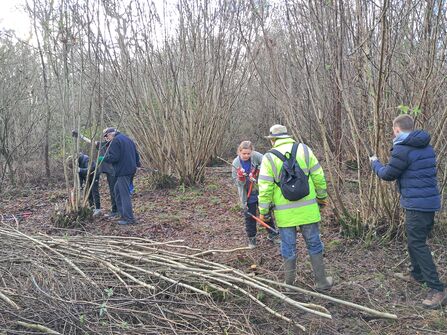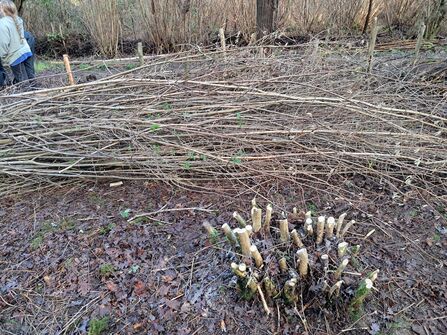

Spring Wood, on the edge of Ipswich, is an ancient coppiced woodland, which has been maintained for hundreds of years. Coppiced woodland is where the trees are cut down to a stump or ‘stool’, encouraging lots of smaller branches to sprout from the base and create a more bushy low lying woodland than a more upright traditional woodland. This has to be done on a regular interval every few years otherwise the trees will just grow back up into a full woodland, with work rotating through different areas or ‘compartments’ in the wood every year so there is a good diversity of tree ages. Some of the stools in Spring wood are hundreds of years old, and therefore make the wood qualify as ancient.
Coppicing might sound counter to helping nature, but the dense low lying woodland it creates is an excellent habitat for all sorts of insects, mammals and birds, and is absolutely vital to Dormice, which are very rare due to the lack across the country of the scrubby woodland they need.
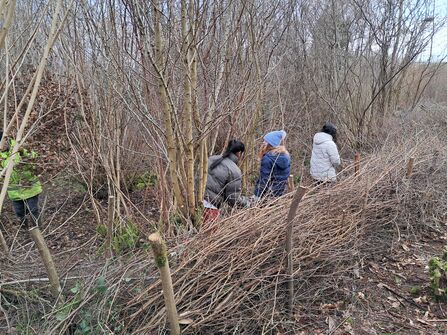
The timber produced doesn’t go to waste either; the long straight stems are set aside for pea sticks, bean poles and other useful lengths, and even the wibbly bits are useful as hedging material to mark the boundaries of the compartments and help reduce the amount of deer that can nibble on the new shoots and prevent the trees growing.
The Young Wardens work coppicing in Spring Wood is both great for them to engage with and help nature, getting outdoors and physically active while making friends, and for those attempting it working toward their Duke of Edinburgh award, and at the same time brilliant for nature and wildlife in Ipswich and Suffolk as a whole.
Find out more about our Young Wardens programme here.